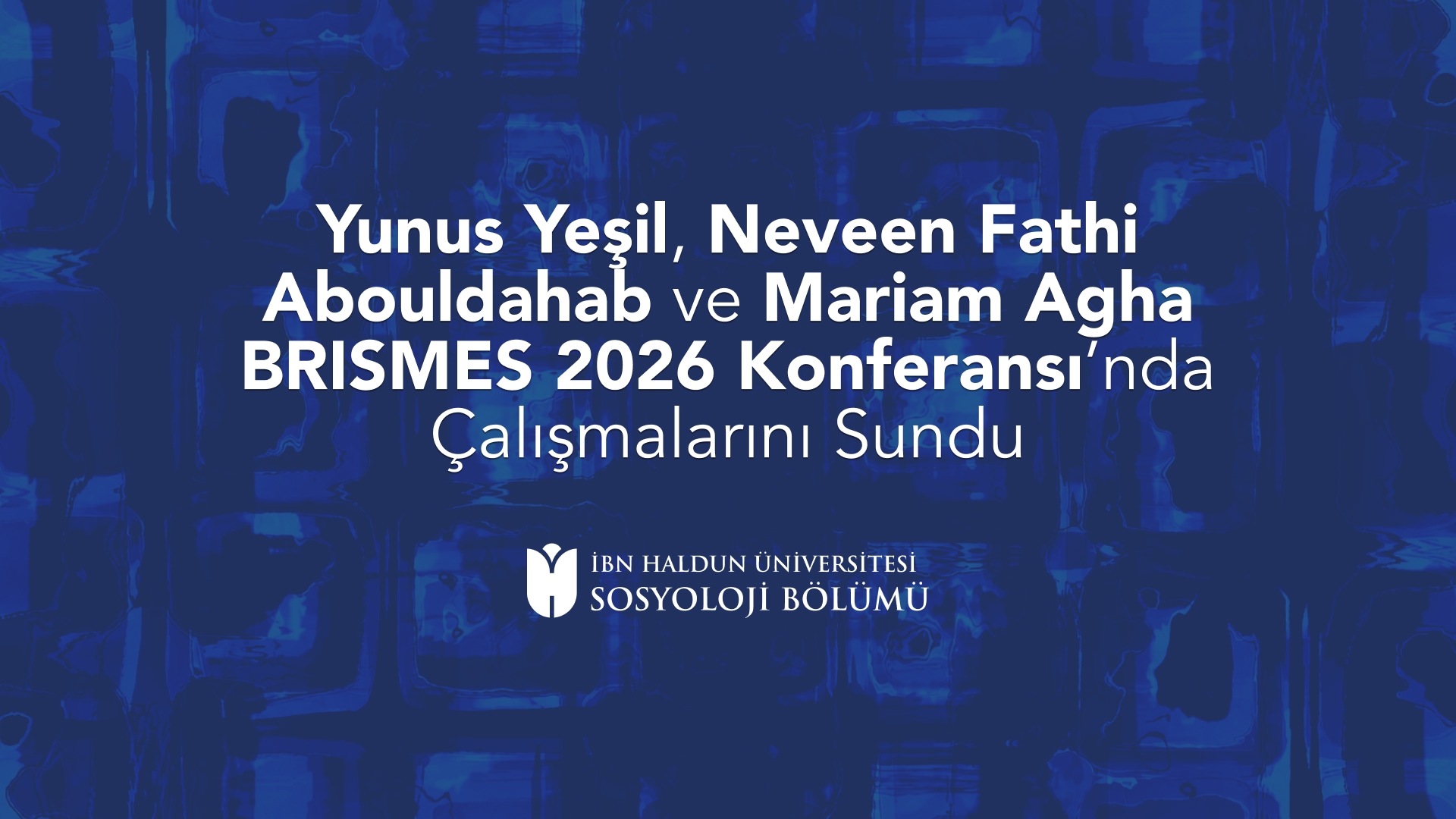
Research Assistant Yunus Yeşil from the Department of Sociology, PhD candidate Neveen Fathi Abouldahab, and MA graduate Mariam Agha -currently pursuing her PhD in the Department of Anthropology at UCL- participated in the British Society for Middle Eastern Studies (BRISMES) 2026 Annual Conference, held at SOAS University of London between 23–25 June 2026.
At the conference titled “War, Empire and Sabotage in an Age of Genocide”, Yunus Yeşil, Neveen Fathi Abouldahab, and Mariam Agha presented their research, contributing to ongoing academic discussions in sociology, migration studies, diaspora, belonging, research ethics, and Middle Eastern studies.
Yunus Yeşil’s presentation, “The Palestine Question in the ‘68 Generation in Türkiye: Ideology, Identity and Memory”, examined the ideological and social relationships between the ‘68 generation of the leftist movement in Türkiye and the Palestine question. The study analysed Türkiye–Palestine interactions through the lens of anti-imperialist movements of the period, processes of identity formation, and collective memory.
Neveen Fathi Abouldahab’s presentation, “From Liminality to Collective Belonging”, explored processes of home-making, belonging, and identity construction among Arab migrants. Drawing on extensive qualitative fieldwork and ethnographic observations, the study addressed migrants’ experiences of uncertainty and liminality within a sociological framework.
Mariam Agha’s presentation, “Ticking Boxes, Missing Worlds: Rethinking Ethics Beyond the Form”, reflected on ethical issues in fieldwork and ethics approval processes from a decolonial perspective, discussing the possibilities of a more context-sensitive and applicable approach to research ethics.
The presentations by researchers from the Department of Sociology at Ibn Haldun University contributed to contemporary academic debates in the fields of migration, diaspora, social movements, and research ethics.