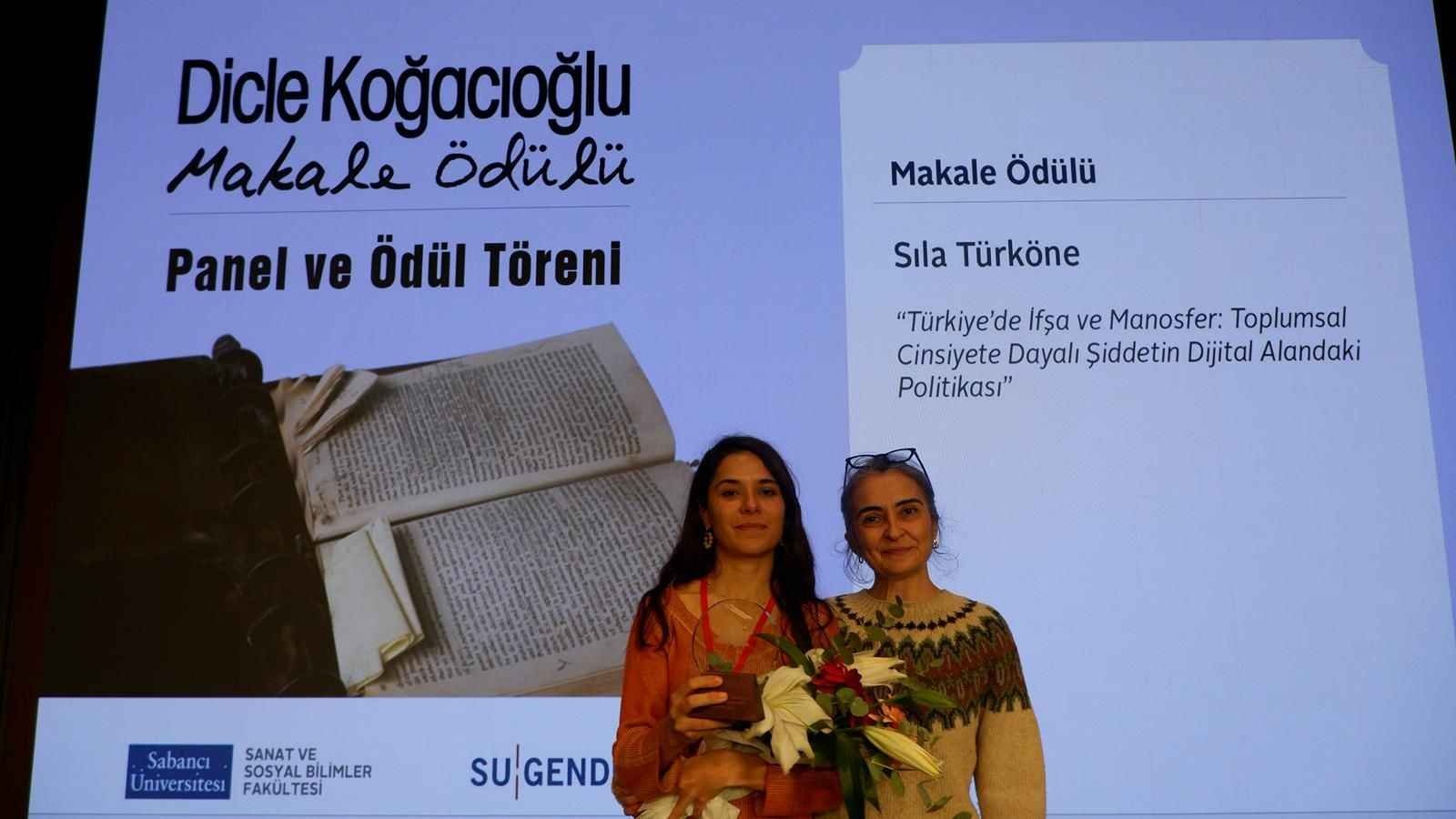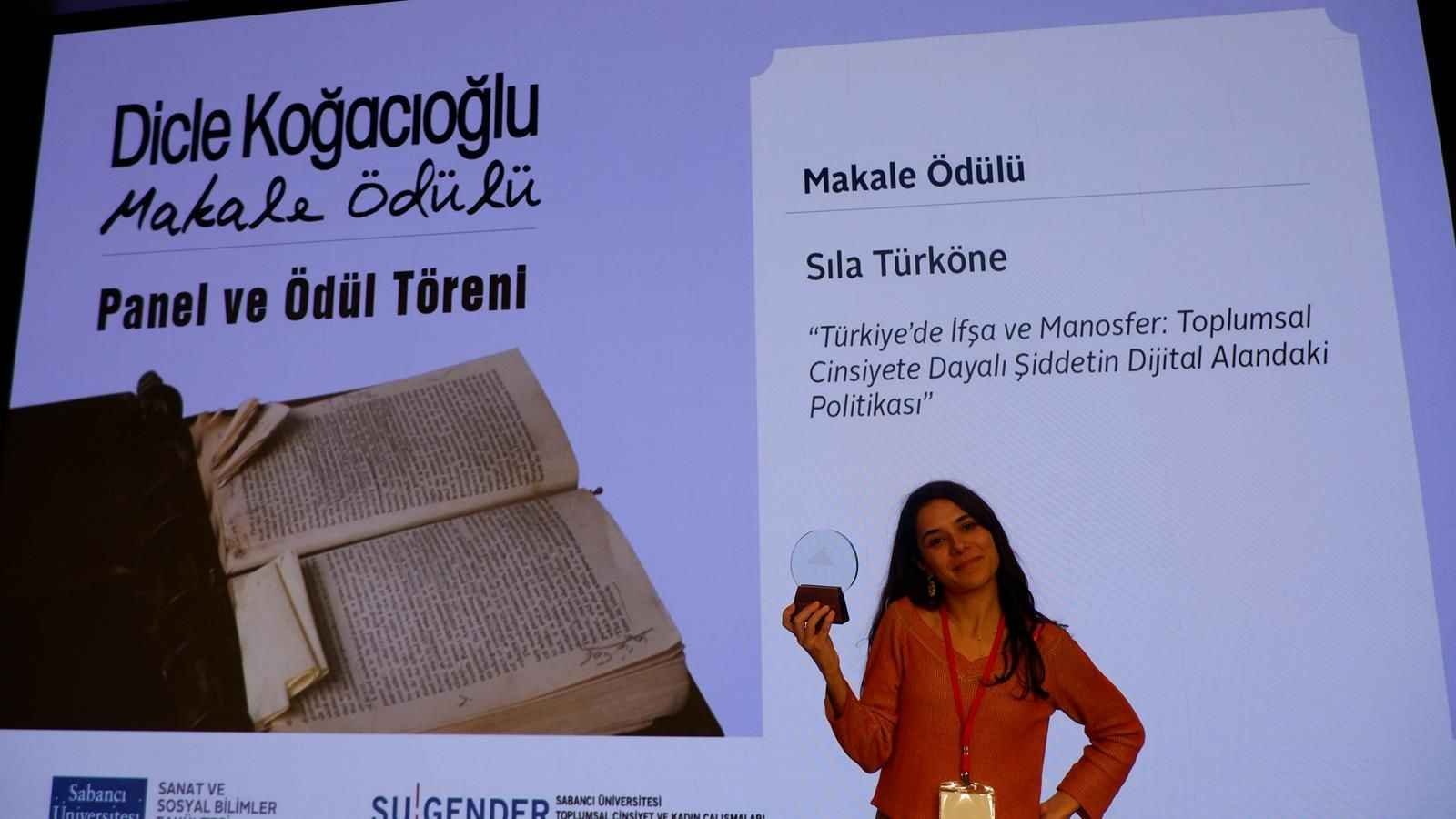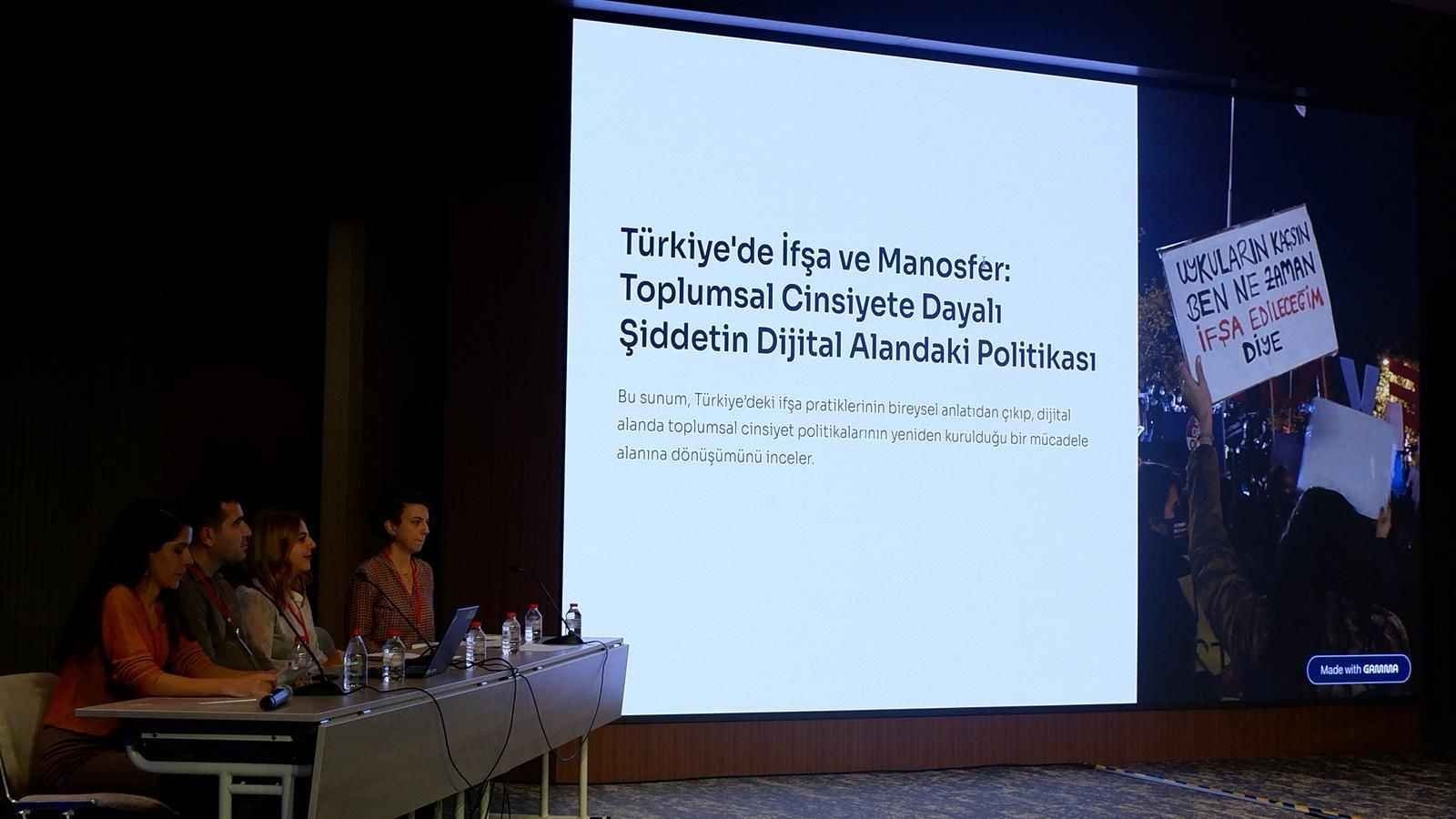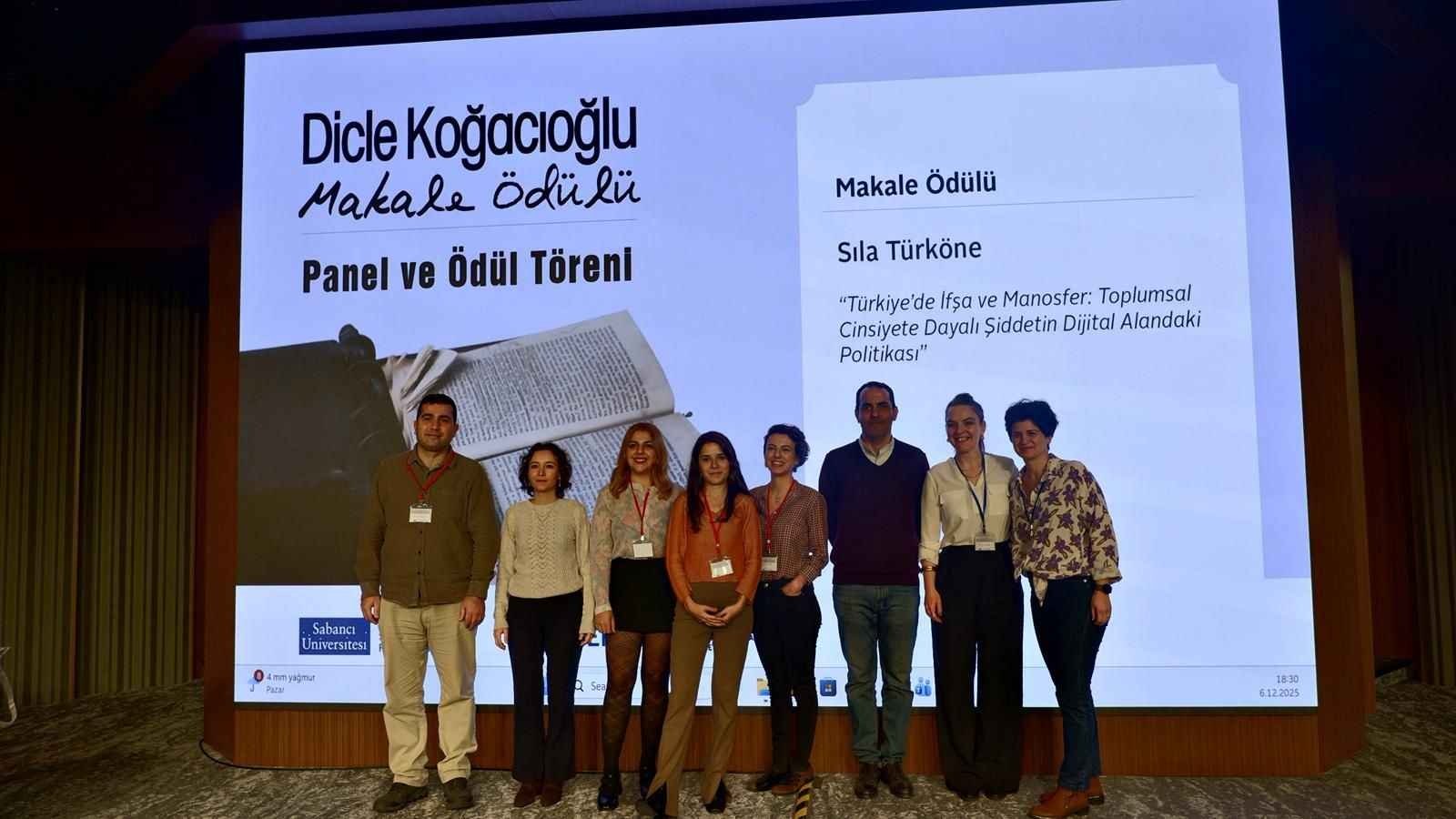
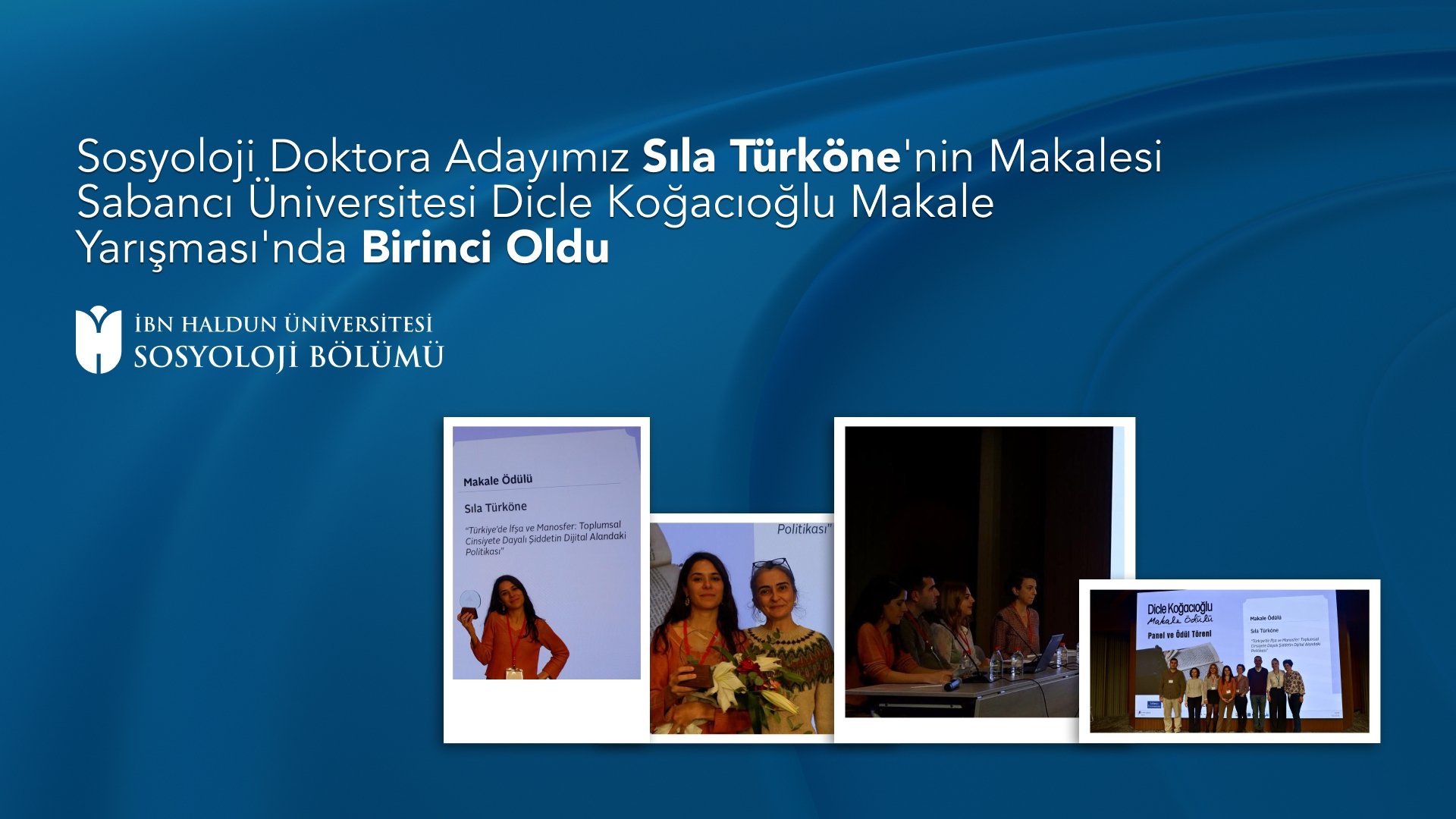
Sıla Türköne, a doctoral student in the Department of Sociology at Ibn Haldun University, has achieved significant success in the field of gender studies in Türkiye by winning first place in a prestigious article competition. Her article titled “Exposure and the Manosphere in Türkiye: The Politics of Gender-Based Violence in the Digital Sphere,” produced from a chapter of her doctoral dissertation conducted under the supervision of Prof. Ramazan Aras and Assist. Prof. Arzu Ünal, was awarded first prize in the 16th Dicle Koğacıoğlu Article Competition, organized this year by Sabancı University. Sıla Türköne received her award during the ceremony held on Saturday, December 6.
Sıla Türköne's study deeply examines the "exposure movement," an area that has not yet been sufficiently researched academically in Türkiye. The article discusses how exposure functions as an alternative tool for justice and solidarity in the fight against sexual and gender-based violence, how it is organized on digital platforms, and what possibilities and limitations it presents. The work positions exposure not merely as a collection of individual testimonies but as a new way to confront patriarchal structures, legal loopholes, and institutional impunity.
This award is of great importance, as it both highlights the significance of studies conducted at the intersection of gender, digital culture, and violence in Türkiye and makes visible the necessity for qualitative, in-depth research on the exposure movement. Sıla Türköne's work discusses the conditions under which exposure practices can be strengthened, and the points at which they create risks and vulnerabilities in the fight against sexual violence, by centering the experiences of women. Thus, it offers an important reference for both the academic literature and for activists and professionals working in the field.
On behalf of our University, we congratulate Sıla Türköne for winning the first-place award, and her advisors Prof. Ramazan Aras and Assist. Prof. Arzu Ünal for their contribution to the emergence of this study. We wish for this qualified work, which contributes to the struggle for gender equality in Türkiye, to pave the way for new discussions and research in the field.