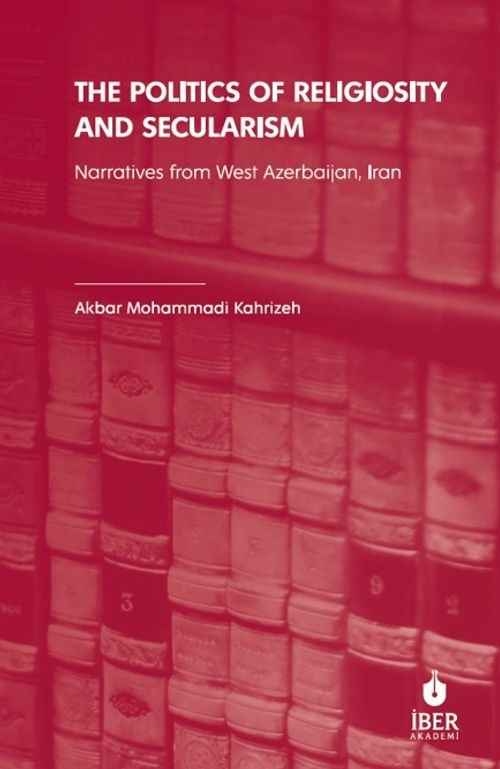
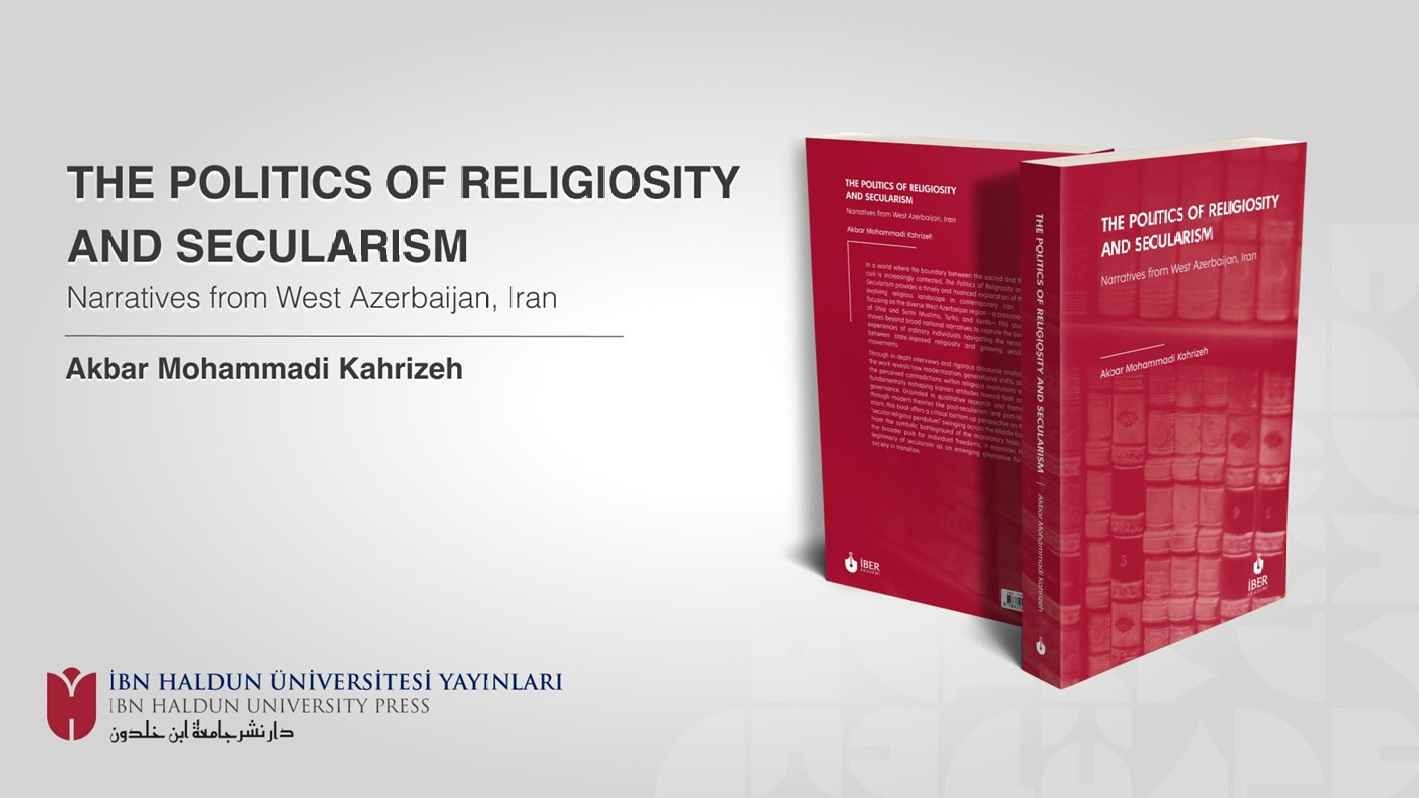
The Sociology master's thesis titled “The Politics of Religiosity and Secularism: Narratives from West Azerbaijan, Iran” completed at our university by our PhD student Akbar Mohammadi Kahrizeh, has been published as a book by IBER Akademi in June 2026.
The book explores the complex and dynamic relationship between religiosity and secularism in contemporary Iran, portraying a society navigating between its historical religious identity and the influence of modern secularism. In recent decades, rapid social change in Iran has placed secularism, and religion along with it, at the center of public debate. Responding to the need for new research into how these concepts are perceived today, the study offers a timely pulse check on religiosity and secularism in Iranian society.
Using a qualitative approach based on in-depth interviews and discourse analysis, the research examines how Iranians understand the categories of religion and secularism. The findings show that people approach these categories in different ways and that their behavior reflects a certain distance from religion. The study stresses, however, that this does not mean Iranian society has become non-religious. Rather, it reflects a search to reject the state's interpretation of religion and replace it with a new one.
According to the study, the key factors shaping these approaches include intergenerational and family relationships, modern forms of social life, and contradictions between the words and actions of religious authorities and rulers. The book demonstrates that the distinction people draw between the state's interpretation of religion and "real Islam" legitimizes debates on secularism in Iranian society. It further argues that, because of its internal contradictions and paradoxical stance toward modernity, religious rule in Iran does not serve religion but instead acts as a catalyst for secularization.
We congratulate Akbar Mohammadi Kahrizeh on this achievement and wish him continued success in his academic journey.